
Offshore Licences: Curacao, Anjouan, Malta and the Rest
 Available in GB
Every non-GamStop casino is regulated by someone – just not by the UK Gambling Commission. The credibility of any such operator depends in part on which offshore regulator issued its licence and how seriously that regulator takes its job. This page lays out the main jurisdictions involved, the strictness gradient between them, and the substantial Curacao reform of 2024-2025 that is currently reshaping the licensing landscape.
Why licence jurisdiction matters more than the licence itself
An offshore licence is only as strong as the regulator behind it. Two operators can carry “Curacao” on their footer and behave very differently in practice if one trades under stricter oversight than the other. The same applies across jurisdictions: a Malta Gaming Authority licence and an Anjouan licence are not comparable artefacts.
Three things separate stricter regulators from looser ones in this space. The first is the substance of the rulebook, including capital requirements, fund segregation, and responsible-gambling obligations. The second is the level of ongoing supervision, including audits, periodic reporting and on-site inspections. The third is the enforcement culture: how often the regulator suspends, fines or revokes, and how visible that enforcement is to the public.
None of this gives UK players the protections of the UK Gambling Commission, which is the broader point covered on the player risks and safe-play checks page. But within the offshore landscape the differences between regulators are real and worth reading carefully.
The offshore strictness gradient
The five regulators that account for the bulk of non-GamStop operators sit at noticeably different points on a strictness gradient. The shorthand below is editorial, not legal, and is intended to support a reader’s own checks rather than replace them.
Malta Gaming Authority
The Malta Gaming Authority is widely regarded as the stricter end of the offshore field. It was established in 2001 and operates under Maltese gaming legislation that has been overhauled several times, including the Gaming Act of 2018. The MGA conducts on-site audits and ongoing compliance reviews of its licensees, supported by EU-grade anti-money-laundering supervision through the Financial Intelligence Analysis Unit. Licensees are expected to maintain documented governance, segregation of player funds and dispute-handling channels.
Application timelines under the MGA are measured in months rather than weeks, and the framework distinguishes between business-to-consumer and business-to-business licences. For a player, an MGA footer is one of the stronger offshore signals available, though it remains outside UK supervision and outside GamStop.
Gibraltar and the Isle of Man
Gibraltar and the Isle of Man are smaller jurisdictions with mature gambling regimes and reputations for cautious licensing. Both are common homes for established UK-facing brands that pre-date the post-2014 UKGC requirement, and both maintain regulator-led complaints handling. Their licensee populations are smaller and the application criteria are demanding, so the typical operator on these licences is well capitalised.
For a UK reader, the practical difference is the dispute pathway. Gibraltar and Isle of Man regulators are accessible and tend to publish decisions, but a complaint still travels outside the UK system, and there is no IBAS or UKGC-approved ADR backstop.
Curacao under the Curacao Gaming Authority
Curacao has long been the most common offshore licence by volume, historically issued under a sub-licensing system controlled by a small number of master licensees. The Curacao reform of 2024-2025 has materially changed this picture and is covered in the next section.
What has not yet changed is the marketplace perception. Curacao licences are still associated with lower barriers to entry than Malta, Gibraltar or the Isle of Man, and even after the reform the new framework will take time to demonstrate enforcement behaviour at scale.
Anjouan
The Anjouan licence, issued from the Union of the Comoros, has become a popular alternative to Curacao for newer operators – particularly crypto-focused and low-friction-KYC sites. Its appeal is the combination of a flat fee structure, short processing time and lighter local-presence requirements compared with the Maltese or Gibraltar models.
The trade-off is exactly what those characteristics suggest. A regulator that lets operators set up quickly will, on average, supervise them less intensively than one that takes months to issue a licence. Anjouan operators can and do behave responsibly, but a player has fewer institutional protections to lean on if a dispute goes badly.
Costa Rica and Kahnawake
Two more jurisdictions appear regularly on non-GamStop footers. Costa Rica does not issue a dedicated gambling licence; operators run from there under generic business permissions, with no gambling-specific supervision. Kahnawake, in Quebec, has a long-running gaming commission with its own rulebook, mostly relevant to a smaller and older population of operators. Both should be assessed on a case-by-case basis rather than treated as equivalents to MGA or CGA-issued licences.
The Curacao LOK and CGA reform of 2024-2025
The most consequential change in the offshore licensing landscape in years is the Curacao reform that brought the National Ordinance on Games of Chance into force. The ordinance is known by its Dutch abbreviation LOK, from Landsverordening op de kansspelen, and is published in the Curacao official gazette as PB 2024 no. 157. The reform has three structural effects on any non-GamStop operator licensed in Curacao.
Parliamentary approval and entry into force
The Curacao parliament approved the LOK in December 2024 by 13 votes in favour and 6 against, and the ordinance entered into force on 24 December 2024. The reform replaced the former regime under the National Ordinance on Offshore Games of Hazard and concluded a multi-year process led by the Curacao authorities. Primary documentation is published by the Curacao Gaming Authority.

A single regulator instead of master licensees
Under the previous regime, four master-licence holders issued sub-licences to the bulk of Curacao-facing operators. The LOK ended that structure. The Curacao Gaming Authority is now the sole issuer of online gaming licences in or from Curacao, taking over the role previously held by the Gaming Control Board. Suppliers of critical gaming services and software also require a CGA permit.
New substantive requirements on licensees
The LOK introduces requirements that previous Curacao licensees did not consistently face. Applicants must be legal entities incorporated and established in Curacao, with a registered seat on the island and at least one resident managing director. Licensees must implement anti-money-laundering controls, comply with responsible-gambling obligations, undergo periodic audits and submit compliance reporting to the CGA. The application process under the new regime is administered through the CGA’s licence portal.
For non-GamStop operators caught by these requirements, the change is meaningful. Existing licensees from the previous regime have been transitioned through a grandfathering process with provisional licences, and new applicants apply directly under the LOK. For a UK reader, the practical effect is that a Curacao licence post-LOK is supposed to mean more than it did pre-LOK, but the reform’s enforcement track record is still building, and a Curacao licence remains outside UK supervision.
Jurisdictions at a glance
The table below summarises the five jurisdictions on three practical axes. It is editorial shorthand, not a substitute for checking an operator’s licence on the relevant regulator’s register.
| Jurisdiction | Strictness shorthand | Typical use case | Practical point for UK players |
|---|---|---|---|
| Malta (MGA) | Stricter end of the offshore field | Established multi-market brands | Outside UK supervision; complaint escalates to the MGA |
| Gibraltar | Mature, cautious | Long-standing UK-facing brands | Outside UK supervision; smaller licensee pool |
| Isle of Man | Mature, cautious | Established and emerging operators | Outside UK supervision; respected dispute handling |
| Curacao (CGA, post-LOK) | Reformed, track record still building | Broad volume, including crypto-friendly sites | Single regulator since 24 December 2024; check the CGA register |
| Anjouan | Lower threshold | Newer crypto and low-KYC operators | Lighter supervision; fewer institutional protections |
How to verify an offshore licence in practice
The footer of an offshore casino usually names the regulator and the licence number. Both should be cross-checked on the regulator’s own website before any account is opened. The brief routine below works for any of the five jurisdictions above.
- Note the licence number and the licensed legal entity. The entity is often a holding company rather than the brand visible to players.
- Open the regulator’s official register. The MGA, CGA, Gibraltar and Isle of Man regulators all publish searchable licensee lists; Anjouan publishes through its issuing authority’s portal.
- Search by licence number and by entity. Both should resolve to a current, active record.
- Read any conditions or notices attached to the licence. Suspensions, warnings or recent enforcement actions are usually published alongside the licence record.
- Verify the seal. The Curacao Gaming Authority and several others now use dynamic seals or iframe widgets tied to the licensed domain. A static image is not equivalent.
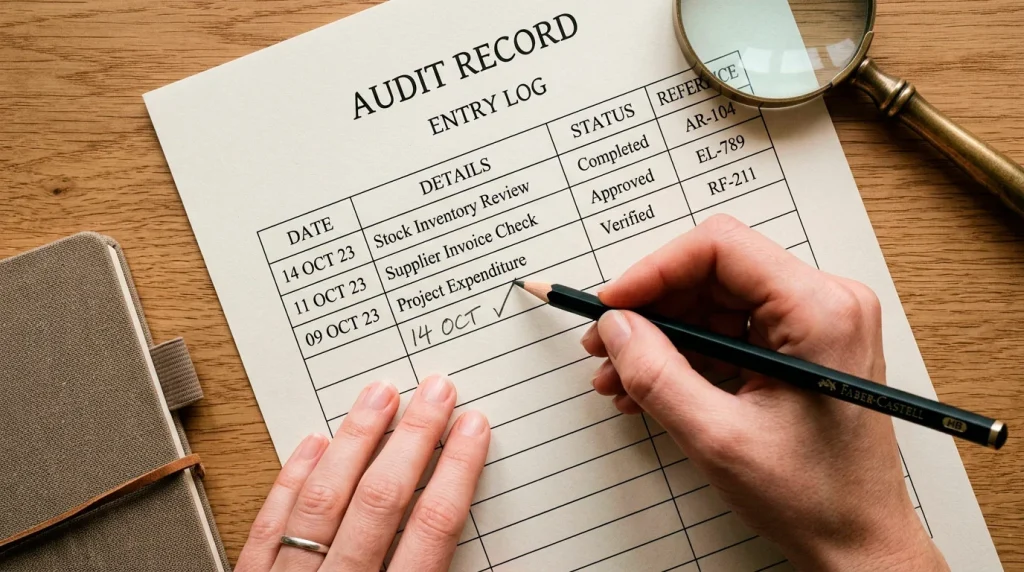
If any step fails – the number does not appear, the entity does not match, the seal is static where a dynamic one is required – treat the licence claim as unconfirmed. A misrepresented licence is among the clearest warning signs in this market.
Practical implications for non-GamStop players
The licensing question matters most at two moments in a player’s experience. The first is when a deposit is made, because the regulator behind the operator determines the rules under which that deposit is held. The second is when a dispute arises, because the regulator’s complaints process is the path to any remedy.
Across the five jurisdictions covered here, the practical differences come down to how fast a regulator responds, how strictly it interprets its rules, and how visible its enforcement is. Stricter regimes do not guarantee good outcomes, and looser regimes do not guarantee bad ones. They shift the odds, and the responsible reading of any offshore footer takes those shifted odds into account.
To revisit the broader assessment framework, the non-GamStop operators compared page sets out the criteria these jurisdiction differences feed into. For a complete view of the topic, the main guide ties licensing to regulation, payments and player protection.
What still needs watching
The offshore licensing field is not static. Two ongoing developments will shape how non-GamStop operators look over the next twelve to twenty-four months.
The first is the Curacao reform itself. Provisional licences issued during the transition will need to be replaced by full LOK licences, and the CGA’s first wave of enforcement actions will set expectations for the new regime in a way that policy text alone cannot.
The second is the trajectory of Anjouan and similar lower-threshold licences. As Curacao tightens, lower-friction alternatives can absorb operators that decide not to comply with the LOK. The growth or contraction of those alternatives is a useful indicator of where the offshore industry’s centre of gravity is moving.
Neither development closes the gap with the United Kingdom’s Gambling Commission framework, and neither restores the protections of GamStop. They will determine, however, how much the word “offshore” actually means at any given operator’s footer.
The full picture is in our guide to casinos not on GamStop.
What a weaker licence costs in practice: the player risks.
Non-GamStop Operators Compared: A Criteria Guide
Prepared by the Casino Not on Gamstop editorial staff.