
Risks of Non-GamStop Sites and How to Check Before You Play
 Available in GB
Asking whether non-GamStop casinos are safe is the wrong question. The honest answer is that some are run by responsible operators and some are not, and the reader has fewer institutional protections than at a UK Gambling Commission site either way. This page sets out the risks that apply across the category, the rogue-operator tactics worth recognising, and a brief routine for checking an operator before any money goes in.
The default risk condition off GamStop
Five risks sit at the category level rather than at any individual operator. They are the default condition off GamStop, not flaws in particular brands, and they apply even if every other check on an operator passes.
No UKGC protection
UK Gambling Commission licensees operate under the Licence Conditions and Codes of Practice, which set rules on advertising, affordability checks, fund-handling, complaint resolution and responsible-gambling tools. None of these apply to a non-GamStop operator. The protections British players assume by default at a regulated site are not part of the deal.
No GamStop coverage
The GamStop scheme covers only operators licensed by the UK Gambling Commission. A registration there does not reach offshore sites, which is exactly why the non-GamStop category exists in the first place. For anyone who has self-excluded, this is the most serious risk on the page.
Limited dispute recourse
The UK alternative dispute resolution system, including IBAS and UKGC-approved ADR providers, does not apply to offshore operators. Disputes go through the licensing jurisdiction’s regulator, which in most cases is slower, less player-facing and less likely to enforce a remedy in pounds sterling. The detail on jurisdictions sits on the offshore licence jurisdictions page; the practical point here is that the path to a remedy is longer.
Variable fund safety
Some offshore licensing regimes do not require operators to hold player balances in segregated accounts. Where segregation is not enforced, an operator’s insolvency can put player balances at direct counterparty risk. There is no Financial Services Compensation Scheme equivalent for gambling deposits anywhere – including at UKGC-licensed sites – so a fall-back compensation pool does not exist either.
Self-exclusion can be undone by accident
A self-excluded player can sign up at a non-GamStop site without triggering any block. This is not a malicious failure on the operator’s side; it is the structural consequence of the scheme’s UK-only scope. For someone whose self-exclusion was meaningful, the safer route is the legitimate responsible gambling support path rather than a workaround.
Rogue-operator tactics worth recognising
Most non-GamStop operators are not rogue. The minority that are tend to use a recognisable repertoire of tactics, and a reader who knows the signs can step away before any money is at stake. These tactics show up in independent forum threads, regulator notices and consumer-protection reports across the industry.
Withdrawal frozen after a large win
The account is locked or suspended once a withdrawal of any size is requested, typically with vague references to “bonus abuse”, “fair play violations” or “additional verification”. Documentation requests escalate, response times stretch, and the funds remain inaccessible.
Pressure to use methods without chargeback
The cashier nudges the player toward methods that cannot be reversed – certain wire transfers, obscure crypto routes or unbranded e-wallets – while making chargeback-friendly options harder to find or temporarily unavailable. The motive is usually to make any later refund effectively impossible.
Lookalike domains and fake SMS
A near-identical domain to the operator’s official site, often with a different top-level domain or a transposed character, is used to capture login or payment details. The same applies to SMS or email purporting to come from the operator. The footprint is technical, the goal is account or banking data.
Pirated or tampered games
The catalogue carries game titles in names a player recognises, but the version running is not the official one from the studio. Pirated builds may have altered return-to-player figures or other modifications. This is harder to detect from outside, but a missing or mismatched provider seal is one indicator.
Hidden win caps and one-sided terms changes
Terms include a maximum win cap on a deposit or a bonus, sometimes buried several layers into the conditions, that is invoked only after a large win. Related to this, terms are changed unilaterally during a session or between a deposit and a withdrawal, with the new version applied retroactively.
Bursts of identical reviews
A site with no track record suddenly accumulates dozens of five-star reviews in a short window, often with similar phrasing, generic user names and matching profile patterns. This is a paid or fabricated reputation rather than organic experience.
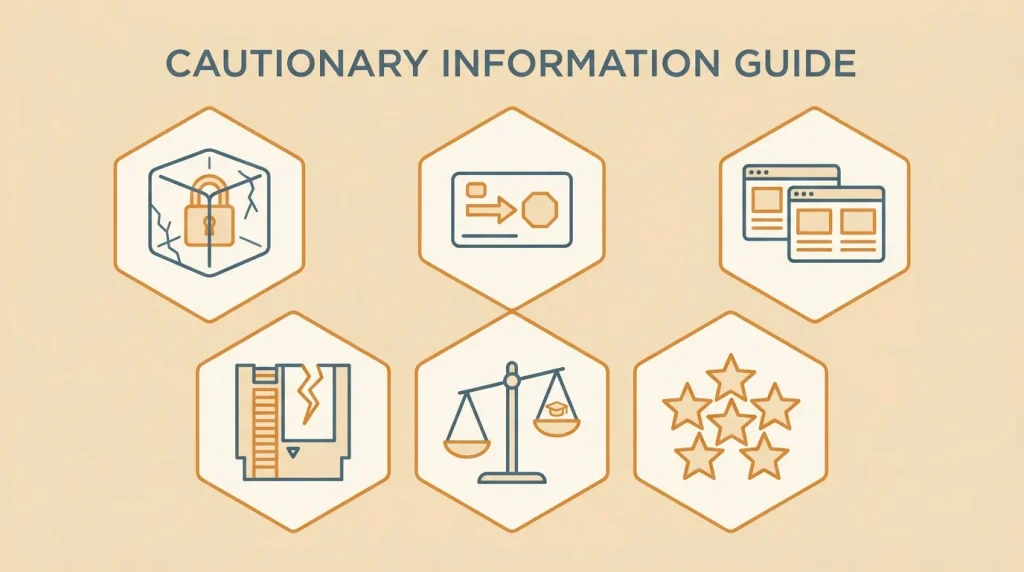
None of these tactics requires technical expertise to spot. They tend to leak through to public discussion threads, regulator notices and consumer alerts, and a fifteen-minute background search is usually enough to reveal whether they apply to any specific operator.
A safe-play check routine
The routine below is a brief pre-deposit screen rather than a full investigation. It cannot certify safety, but it will catch the clearest red flags and give a reader a defensible answer to whether the operator is worth depositing with at all.

Footer and licence
Read the footer. It should name the company, the registered address, the regulator and the licence number. Copy the licence number and look it up directly on the regulator’s website. If the search does not return an active record matching the operator’s legal entity, the licence claim is unproven and the routine ends there.
Terms and conditions
Open the terms page and look for the last-updated date. Read the sections on withdrawals, identity verification at cashout, maximum payouts per period, and bonus wagering rules. Look specifically for win caps, maximum cashout limits on bonus play, and any clause that lets the operator change terms with retrospective effect. Vague, undated or contradictory terms are a warning sign on their own.

The corporate entity behind the brand
Search the parent company’s name with terms like “complaint”, “withdrawal”, “regulator decision” and “warning”. Independent threads, regulator publications and dated dispute summaries are more informative than testimonials on the operator’s own site. Affiliate review sites are not reliable sources, since they earn commissions on player sign-ups.
The live channel
Open a chat or email session before depositing. Ask one direct question about identity verification at cashout, and one about the typical withdrawal time for a debit card or a chosen e-wallet. Note the speed and consistency of the reply. An evasive or contradictory answer is a stronger signal than any marketing claim.
Payment methods on offer
Pay attention to which methods the cashier promotes most prominently. A balanced offering across debit, e-wallets and bank-transfer rails is more reassuring than a cashier that funnels deposits toward unbranded crypto or obscure wires. The non-GamStop operators compared page sets the wider assessment framework these checks feed into.
A dispute playbook when things go wrong
If something does go wrong – a frozen withdrawal, an unexplained account closure, a sudden terms change – the response that gets the best outcome is structured rather than emotional. The steps below are the framework most independent consumer-protection resources recommend.
- Document everything immediately. Screenshot the balance, the cashier page, all chat transcripts, all emails and any relevant terms-page version. Keep date and time visible. The operator’s records are not under your control; yours are.
- File a formal complaint with the operator in writing. Email rather than chat, and ask for a reference number. Set out the facts in numbered points, with dates and figures, and ask for a substantive response within a clear deadline (typically fourteen days).
- Consider chargeback or e-wallet dispute where applicable. Debit-card deposits and several e-wallets allow a dispute window. Chargeback is not available on most crypto methods or many wire transfers, which is one reason to favour reversible payment rails at offshore operators.
- Escalate to the licensing regulator. Use the regulator named on the operator’s footer. Submit your reference number, your evidence and a brief timeline. Track the case ID. The offshore licence jurisdictions page covers how the main regulators handle complaints.
- Report criminality to Action Fraud. If the operator’s behaviour crosses into fraud rather than poor service – misrepresented licence, fabricated terms, stolen banking data – report it to Action Fraud, the UK’s national reporting centre for fraud and cybercrime.
When to stop instead of escalate
One of the most useful checks is whether an operator is still worth pursuing at all. If a brand has cycled through multiple complaints, changed corporate name several times, or operated for less than a few months, the realistic recovery odds may be low enough that the responsible answer is to write off the loss and stop the engagement rather than escalate further.
The same applies in a different direction. If the underlying problem is not the operator but the impulse to keep playing, the right next step is not a different non-GamStop site. It is the responsible gambling support route and a conversation with a professional. The main guide covers how the topics on this site connect to each other.
The full picture is in our guide to casinos not on GamStop.
The money side of the same question: paying and staying safe.
Non-GamStop Operators Compared: A Criteria Guide
Prepared by the Casino Not on Gamstop editorial staff.