
Non-GamStop Operators Compared: A Criteria Guide
 Available in GB
A useful comparison of operators outside GamStop starts with a hard truth: there is no neutral way to call any of them the best. They sit outside the UK Gambling Commission’s perimeter, which means the consumer protections British players rely on do not apply by default. This guide replaces ranked shortlists with a criteria-based assessment framework, and routes readers to the supporting pages on offshore licence jurisdictions and player risks and safe-play checks.
What “non-GamStop” actually describes
The label “non-GamStop” is a category, not a brand. It covers any online casino that is not connected to GamStop, the national multi-operator online self-exclusion scheme operated by The National Online Self-Exclusion Scheme Ltd. The scheme is mandatory for all operators holding a remote licence from the UK Gambling Commission, but it has no reach over operators licensed elsewhere.
Because GamStop integration is enforced only on UKGC licensees, the population of “non-GamStop” sites is, by definition, the population of operators that target British players without holding a UKGC remote licence. Their permission to operate comes from an overseas regulator instead.
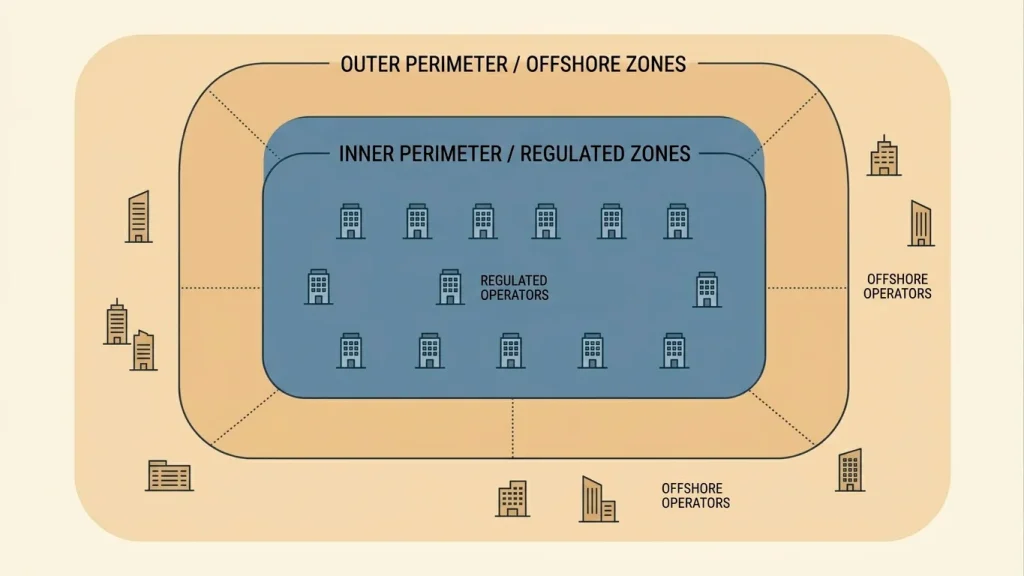
This single structural fact – that the GamStop database does not extend beyond UKGC licensees – is what creates the entire category. It is also what creates almost every assessment difficulty that follows. There is no UK-wide register of these operators, no single complaints body covering them all, and no shared standard for fund segregation or advertising. Each operator carries the rules of whichever regulator issued its licence, and those regulators differ in detail and rigour.
Treat any list that calls itself a ranking of non-GamStop casinos with caution. Without a common regulator there is no shared yardstick to rank against, so a ranking either smuggles in subjective preferences or reflects affiliate priorities that have nothing to do with player outcomes. For the broader regulatory background, the legal status for UK players page covers what these gaps mean in practical terms.
An assessment framework instead of a ranking
The honest replacement for a ranking is a set of criteria a reader can apply themselves. None of these criteria settle the question of safety on their own. They are checks that, together, raise or lower the level of risk associated with a given operator.
Licence jurisdiction and licence quality
The first criterion is which regulator issued the operator’s licence and how strict that regulator is in practice. The Malta Gaming Authority sits at the stricter end of the offshore field, with financial audits and ongoing compliance obligations. Gibraltar and the Isle of Man are mature regulators with comparable expectations. Curacao is the most common offshore licence and is currently undergoing a substantial reform under the National Ordinance on Games of Chance, with the Curacao Gaming Authority as the sole licence issuer. Anjouan, in the Union of the Comoros, has emerged as a popular low-threshold alternative.
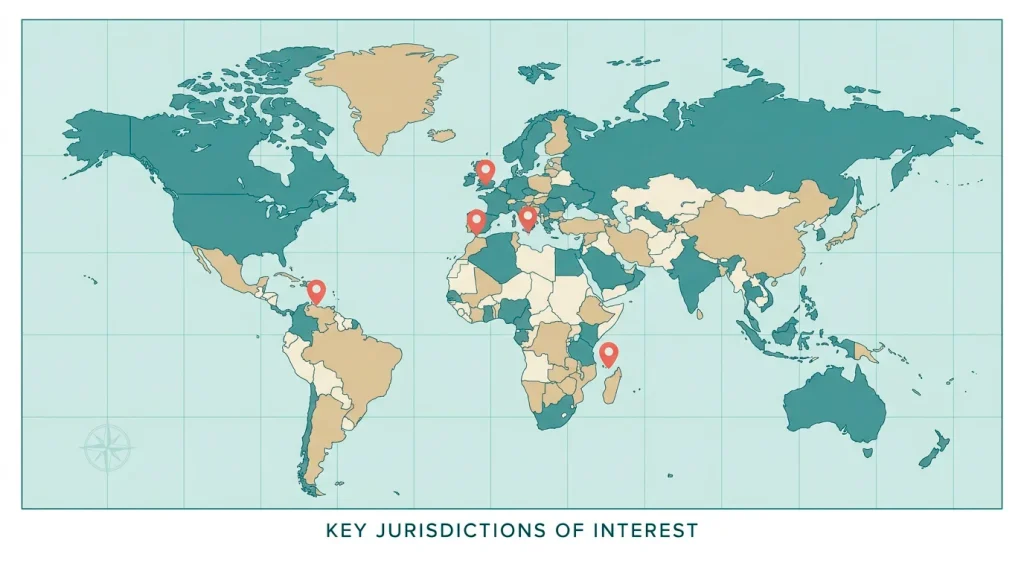
The licence number on a footer should be verifiable on the regulator’s own register. If it is not searchable on the regulator’s website, treat the claim as unproven regardless of how the operator presents it. The supporting page on offshore licence jurisdictions walks through each regulator and the recent Curacao reform in detail.
Year of establishment and corporate trail
An operator that has traded for several years under the same corporate name leaves a longer trail of dispute outcomes, payment behaviour and regulatory history than one that launched last quarter. Age is not virtue, but a very new brand carries less observable evidence either way, which raises uncertainty.
The corporate entity behind the brand matters at least as much as the brand. Some groups operate dozens of skins from a single licence, sharing terms, processors and complaint patterns. Identifying the parent company on the footer or terms page lets a reader search for related brands and any past enforcement action.
Fund handling and withdrawal terms
Two questions decide most of the financial risk. Are player balances segregated from the operator’s own working capital, and what are the published withdrawal terms? Some offshore regimes do not require segregation, which creates direct counterparty exposure if the operator becomes insolvent. There is no Financial Services Compensation Scheme equivalent for gambling deposits, even at UKGC-licensed sites, so a reader cannot rely on a fall-back at any operator.
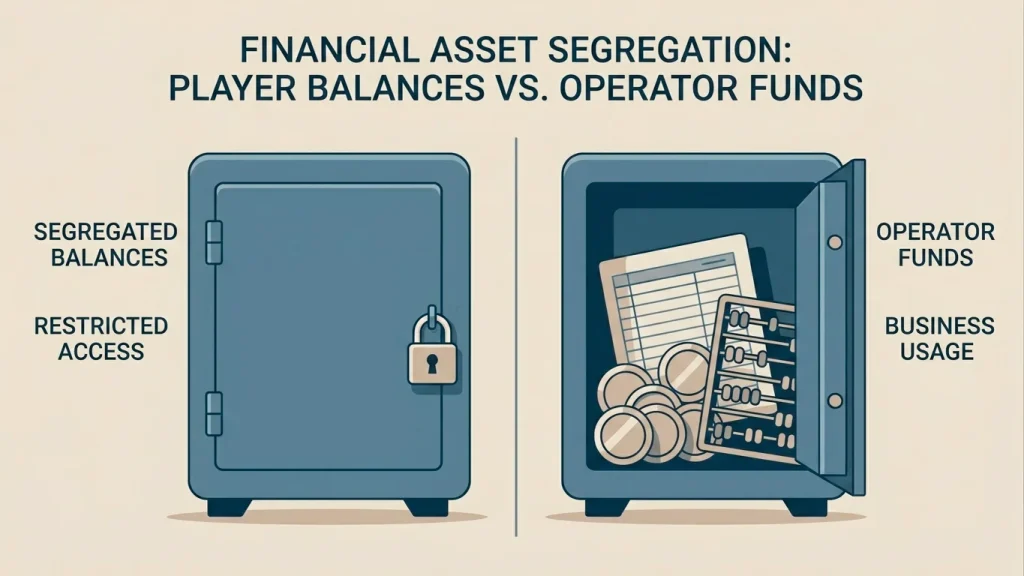
Withdrawal terms include identity verification at cashout, maximum daily or monthly payouts, processing windows, currency conversion costs, fees, and rules around bonus-tagged balances. Each of these can postpone, reduce, or in worst cases eliminate a withdrawal. A clear, dated terms page is a positive sign. Vague boilerplate, “house rules” that are not actually published, or terms that change after a win are well-known warning flags.
Dispute recourse and the regulator’s complaints channel
When something goes wrong, the question is who decides. UKGC operators are required to use approved alternative dispute resolution providers, and players have IBAS and similar bodies to escalate to. Non-GamStop operators are not in that system. Disputes go through the licensing jurisdiction’s regulator, which in most cases is slower, less player-facing, and less likely to enforce a remedy in pounds sterling.
The detailed dispute playbook for non-GamStop sites lives on the player risks and safe-play checks page. At hub level the takeaway is simple: a credible operator publishes a complaints route in writing, and the licensing regulator on the footer is the body a reader will end up dealing with if escalation is needed.
A neutral comparison snapshot
The table below is illustrative. It uses anonymised profiles drawn from publicly observable patterns rather than named brands, because no operator name is published on this site without two independent verification checks, and because the niche is too volatile to publish a static ranked list with confidence. Each profile is accompanied by at least one objective risk marker, in the spirit of an editorial assessment rather than a recommendation.
| Profile | Licence jurisdiction | Operating since | Notable characteristics | Assessment | Objective risk marker |
|---|---|---|---|---|---|
| Profile A | Malta (MGA) | Long-established | Broad game catalogue, fiat-only payments, structured KYC at cashout | Reviewed against the framework | No UKGC protection; no GamStop coverage |
| Profile B | Gibraltar | Long-established | Sportsbook plus casino, e-wallet support, in-house live-dealer | Assessed against the framework | Limited UK-style dispute recourse |
| Profile C | Curacao (CGA, post-LOK) | Recently relicensed | Crypto-friendly cashier, sizeable welcome offer with high wagering | Reviewed against the framework | Offshore licence; fund segregation not guaranteed |
| Profile D | Anjouan | Newer brand | Low-friction registration, no-KYC up to a threshold, crypto rails | Assessed against the framework | Limited dispute recourse; opaque KYC triggers |
| Profile E | Costa Rica permission | Variable | White-label platform, generic terms, multi-skin operator | Reviewed against the framework | Costa Rica grants no gambling licence as such; weaker regulatory hook |
The point of the table is not to suggest a reader should pick one of these profiles. It is to show what a serious assessment looks like and what an honest risk marker reads like. Any real operator should be checkable against each column independently before any deposit is considered.
Risk markers that apply across the category
Some risks attach to every operator in this category, no matter where they are licensed or how long they have traded. They are best treated as the default condition of the category rather than as individual flaws.
- No UKGC protection. Operators outside the UK Gambling Commission’s licensing regime are not subject to its Licence Conditions and Codes of Practice, including British rules on advertising, affordability and operator solvency safeguards.
- No GamStop coverage. The national self-exclusion scheme does not reach offshore operators, so a registration there does not block sign-ups outside the scheme.
- Limited dispute recourse. Complaints are heard by the licensing jurisdiction’s regulator, with no UK ombudsman backstop.
- Variable fund safety. Player-balance segregation depends entirely on the licensing regime and the operator’s own practice.
- Payment friction. GBP accounts and Faster Payments are not guaranteed; conversion fees and chargeback limits vary widely.

Stating these as defaults, rather than tucking them into a disclaimer at the bottom, is what separates information from promotion. Anyone considering an operator in this space should be able to articulate which of these defaults applies to them and why.
Verifying an operator yourself
Verification is a short routine rather than a deep investigation, and a reader can do it in under fifteen minutes. The aim is not to certify safety, which is impossible from outside, but to catch the clearest red flags before any account is created.
Read the footer
The footer should name the company, the registered address, the licence-issuing regulator and a licence number. Copy the licence number and search it on the regulator’s official register. If the entry does not exist, or the operator name does not match, stop there.
Open the terms page
Look for the date of last update, the rules around withdrawals, the maximum cashout per period, identity verification requirements, and bonus wagering and conversion rules. If clauses are vague, missing, or contradict each other, treat the operator as opaque.
Search the corporate entity
Search the parent company’s name with terms like “complaint”, “withdrawal”, “licence” and “regulator decision”. Independent forum threads, regulator notices and dated dispute summaries are more informative than testimonials on the operator’s own site or affiliate review aggregators.
Test the live channel
Open a live chat or email session before depositing. Ask one specific question about identity verification at cashout and one about withdrawal time. The quality, speed and consistency of the answer is a useful proxy for how a real dispute would be handled.

Legal context for UK players
The legal position for the individual player is narrower than the public conversation often implies. Accessing a non-GamStop site from the UK is not, in itself, a criminal act for the player. The offences in the Gambling Act 2005 explanatory notes and the Gambling (Licensing and Advertising) Act 2014 explanatory notes are directed at operators who provide or advertise gambling without the required UK licence.
What is correctly described as a legal grey area is the gap between legality and protection. Being legally permitted to play does not place an offshore operator under UK supervision. The full picture on this point is on the legal status for UK players page.
Limitations of any comparison in this space
Three limitations apply to every comparison of non-GamStop operators, including this one. They are worth stating openly because the alternative is the false confidence of an affiliate listicle.
The niche is volatile. Brands launch, change ownership and disappear within months. A snapshot taken today may be stale by the next quarter, particularly while the Curacao reform reshapes the licensing landscape.
Verification is partial. From outside an operator, only what is published, registered or reported is observable. The internal practices that decide most outcomes – reserve management, AML decision-making, real escalation of complaints – are not visible to a player or an editor.
The base condition is uneven. Comparing operators across different regulators is comparing across different rulebooks, so a like-for-like ranking is not really available. The honest version is a criteria-based read of each operator against the same questions.
The main casinos not on GamStop guide sits one click up and pulls these threads together with the regulation and payments clusters.
The full picture is in our guide to casinos not on GamStop.
Start the assessment with the licence: the jurisdictions.
Non-GamStop Operators Compared: A Criteria Guide
Prepared by the Casino Not on Gamstop editorial staff.