
How GamStop Works: Scheme Mechanics
 Available in GB
Most explanations of GamStop stop at “it blocks you from gambling sites”. The mechanics matter more than that summary suggests, because they explain why a term cannot be cancelled early and why the scheme cannot touch offshore operators. This page walks through the register, the checks, the exclusion terms and what happens to an account while it is excluded.
The scheme behind the screen
GamStop is operated by The National Online Self-Exclusion Scheme Limited, commonly written as NOSES, which is a not-for-profit body. The scheme launched in April 2018 and became a mandatory licence condition for every online operator regulated in Great Britain from 31 March 2020.
That mandatory status comes from the regulator’s social responsibility code, not from a separate law passed for GamStop alone. Before 31 March 2020 some operators participated voluntarily; after that date participation became a condition of holding a UK Gambling Commission licence. The regulator describes this on its self-exclusion schemes page.
A central register checked in real time
When you register with GamStop, the scheme stores your identifying details, including your name, date of birth, addresses, email addresses and phone number. These details are distributed to the participating operators.
Operator systems check the register when someone tries to open an account or log in. If the details match a registered self-excluder, the operator must block that account from gambling, from creating a new account and from receiving marketing. Licensed businesses keep their copy of the self-excluded list current, refreshing it on a regular cycle so that new registrations take effect quickly rather than weeks later.
You can register or check the official process directly at the GamStop website. The matching is done on personal data, which is why using slightly different details is precisely the kind of circumvention the scheme is designed to resist.

Three terms, and why none of them can be cut short
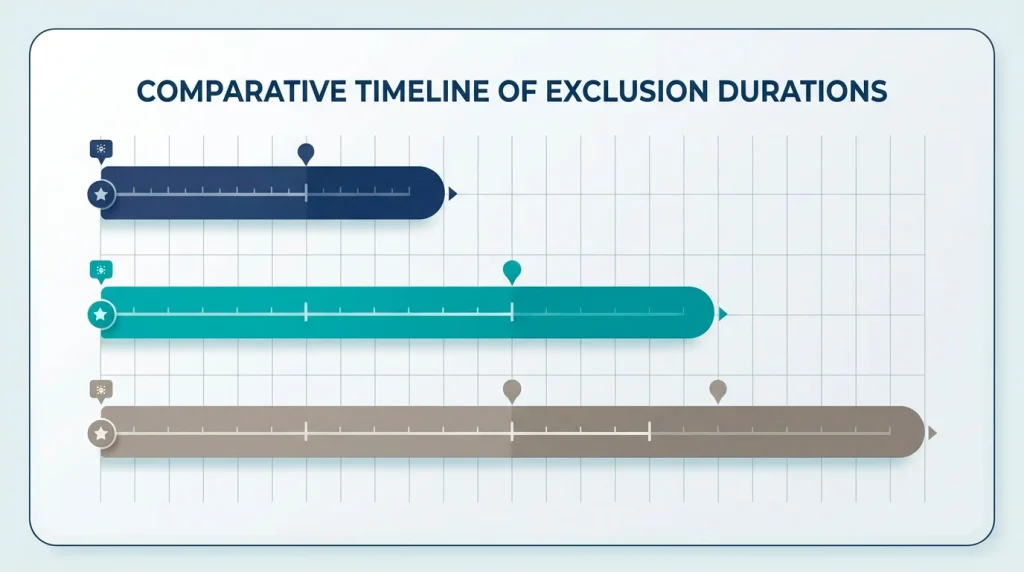
At registration you choose how long the exclusion lasts. There are three options: six months, one year or five years.
- Six months
- The shortest term, often chosen by people taking a deliberate break rather than stepping away long term.
- One year
- A middle option giving a longer enforced gap.
- Five years
- The longest single term available through the scheme.
A term can be extended, but it cannot be shortened or removed before it ends. This is the single most misunderstood feature of the scheme, and it is deliberate: an exclusion that could be cancelled in a weak moment would offer far less protection. The responsible route once a term ends is covered separately, and the statutes that give the regulator its authority are traced in our explainer on the offshore gap in UK law.
What happens when a term ends
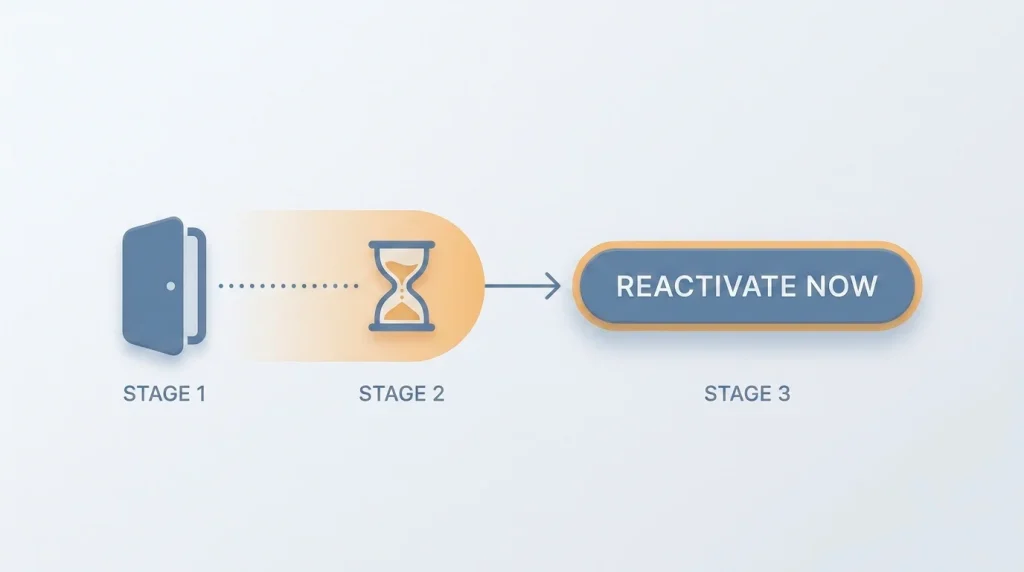
An exclusion does not simply switch off the instant the clock runs out. After the chosen term expires there is a cooling-off period before access can resume, and a person has to take a positive step to reactivate rather than being let back in automatically.
This staged ending is another protective design choice. It removes the scenario where a hard moment coincides exactly with the term expiring and access reopening with no friction at all.
Your money during an exclusion
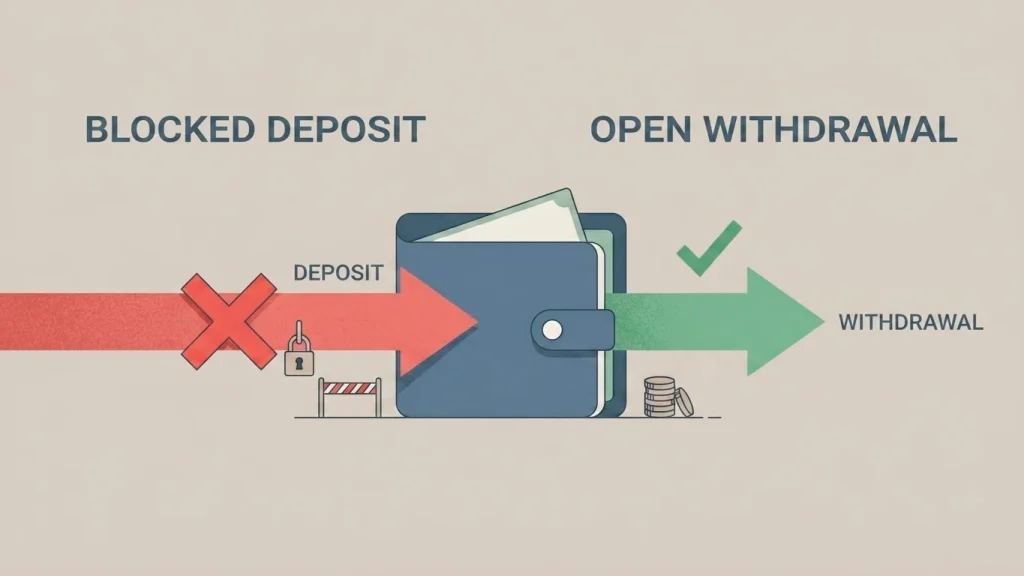
While an account is excluded, you cannot deposit or place new bets. Withdrawing the remaining balance is a different matter: the regulator expects operators to close a self-excluded account and return the player’s funds, so money already in the account is not lost.
In short, exclusion stops further spending without trapping the balance you already hold. This separation of “no new deposits” from “you can still withdraw” is worth knowing, because some misleading sites blur the two.
What GamStop does and does not cover
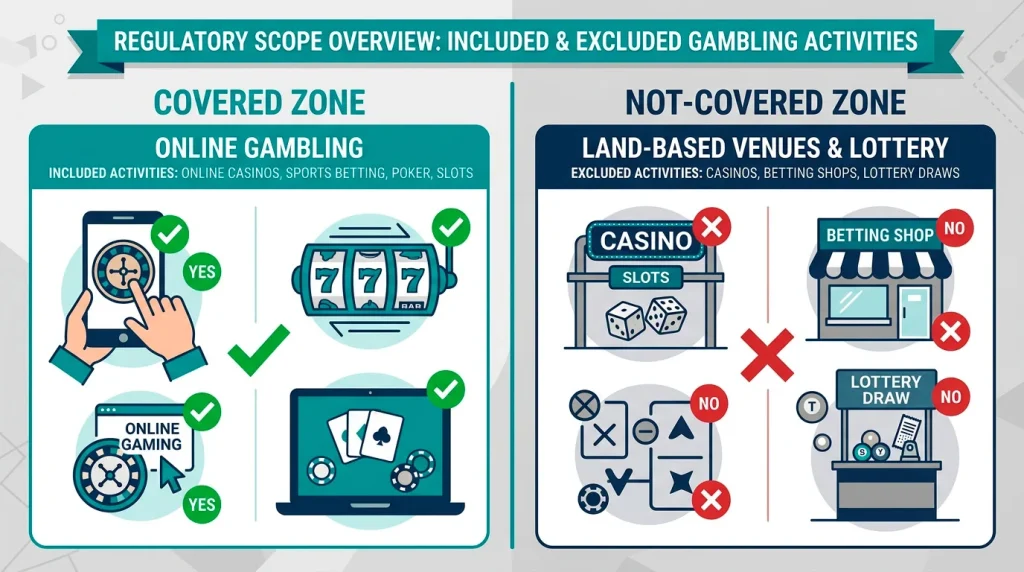
GamStop covers online operators licensed by the UK Gambling Commission. It does not cover land-based venues, which use a separate scheme for premises-based self-exclusion, and it does not cover draw-based National Lottery games.
It also does not reach offshore operators, because those sites are not UKGC licensees and were never required to connect to the register. That boundary is the structural reason non-GamStop casinos exist, a point this cluster’s regulation overview sets in its wider context.
Why the mechanics matter for the offshore question
Once the mechanics are clear, the rest of the topic falls into place. GamStop is strong precisely because it cannot be switched off on impulse and because operators must check the register continuously. It is limited precisely because its authority flows from a UK licence, and an unlicensed offshore site carries no such obligation.
That is the honest shape of the scheme: robust within its reach, and silent beyond it. You can return to the broader picture through our non-GamStop casinos guide.
The full picture is in our guide to casinos not on GamStop.
Whether playing outside it is lawful: the legal status.
GamStop and UK Self-Exclusion Explained
Prepared by the Casino Not on Gamstop editorial staff.