
GamStop and UK Self-Exclusion Explained
 Available in GB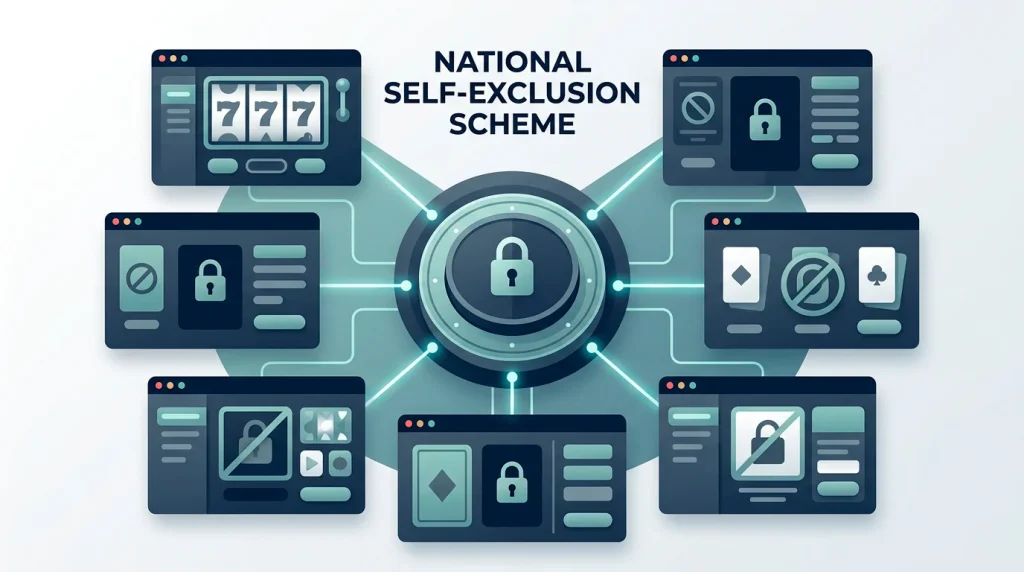
GamStop is the national online self-exclusion scheme that lets a person block themselves from every gambling site licensed in Great Britain through a single registration. This overview ties together three things people usually research separately: how the scheme works, the gambling law that sits behind it, and what it means for the offshore sites that fall outside its reach.
What GamStop is and who runs it
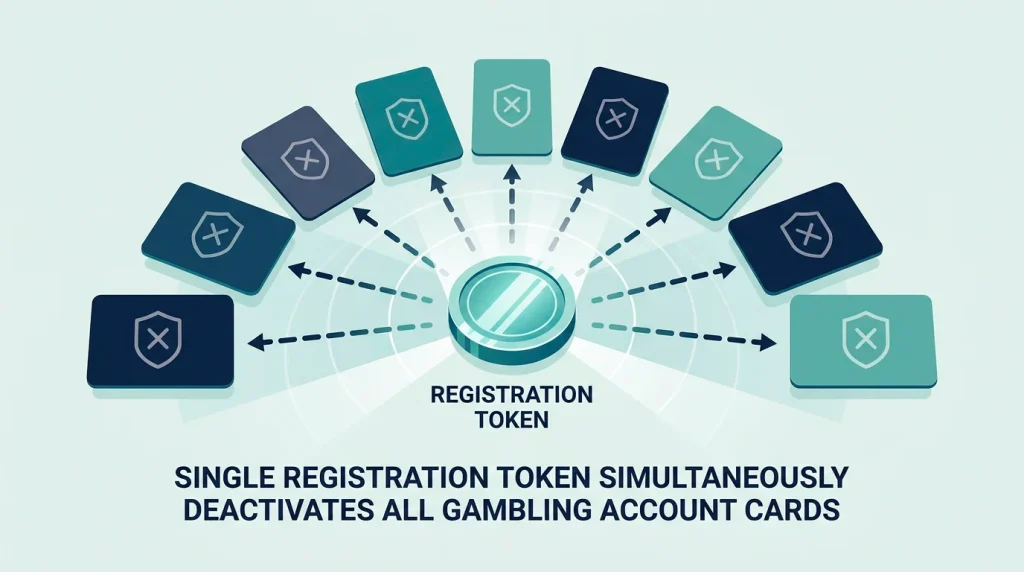
GamStop is a free, multi-operator self-exclusion service for online gambling in Great Britain. A single registration is shared across participating operators so that one request blocks access to all of them, rather than a player having to contact each site separately.
The scheme is run by The National Online Self-Exclusion Scheme Limited, usually shortened to NOSES, a not-for-profit organisation. GamStop was launched in April 2018 and ownership of NOSES later moved away from the industry body that originally developed it, a change made to give the scheme independence.
You can read the regulator’s own description of multi-operator schemes on the UK Gambling Commission self-exclusion page, and register directly through the official GamStop website.
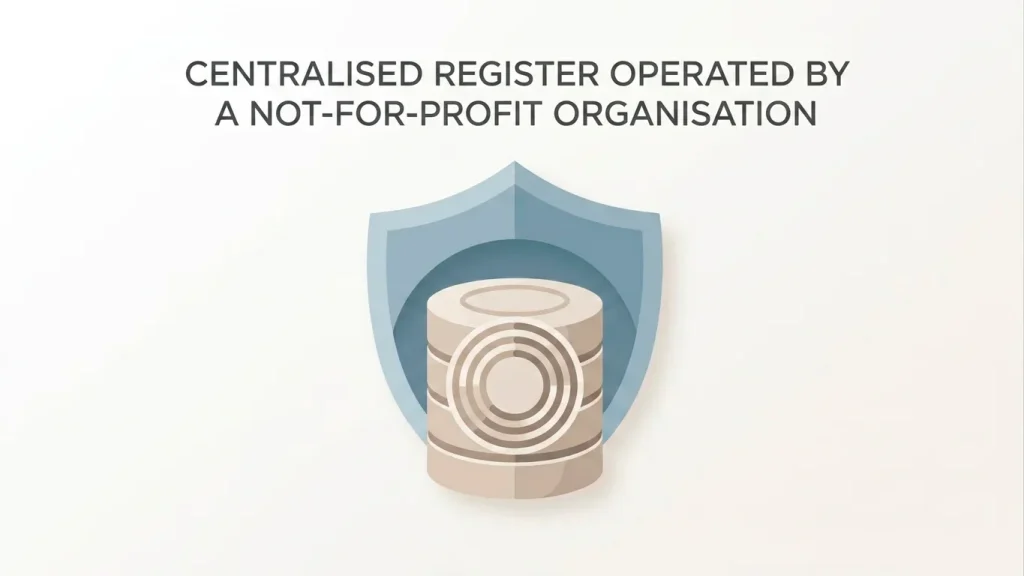
How a single registration blocks every UK-licensed site
When someone registers, GamStop holds their identifying details and shares them with the network of participating operators. Operators must check this central register and block any matching account from gambling, new sign-ups and marketing.
A player chooses one of three exclusion lengths: six months, one year or five years. The term can be extended, but it cannot be shortened or lifted before it ends. That design choice is deliberate, and the detail of how the database and the exclusion periods function is covered on our dedicated guide to how GamStop works.
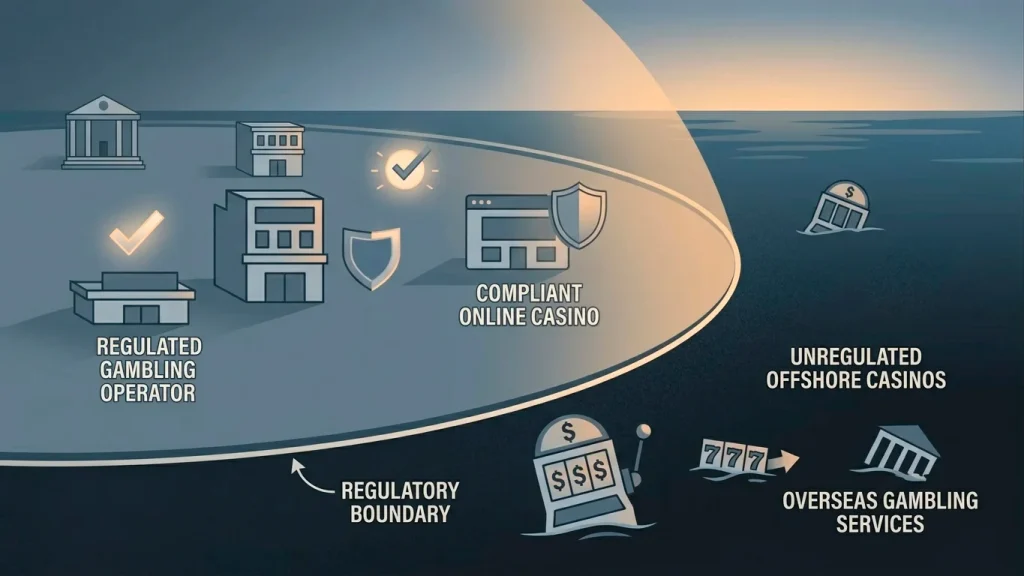
Crucially, the scheme only reaches operators that hold a licence from the UK Gambling Commission. It does not cover offshore casinos, which is the structural reason the non-GamStop niche exists at all.
The legal backbone: the Gambling Act 2005 and the UKGC
The framework behind GamStop is the Gambling Act 2005, the primary statute that regulates gambling in England, Wales and Scotland. The Act created a single statutory regulator, the Gambling Commission, and made providing facilities for gambling without the required licence an offence under section 33.
The regulator sets licence conditions through the Licence Conditions and Codes of Practice, known as the LCCP. It was a change to those conditions that made participation in GamStop a requirement for all online operators from 31 March 2020, rather than a voluntary choice.
The original wording of the Act and the regulator’s published guidance can be examined at the Gambling Act 2005 explanatory notes on legislation.gov.uk and on the Gambling Commission website. The longer story of how UK law came to leave offshore operators outside the scheme is set out in our explainer on UK gambling law and the offshore gap.

Why offshore sites sit outside the scheme
The obligations in UK gambling law are directed at operators, not at individual players. An operator that serves the British market under a UK Gambling Commission licence must integrate with GamStop. An operator licensed only in another jurisdiction, and not selling into the UK under a UKGC licence, has no such obligation.
That is the entire mechanism. There is no clever technical bypass involved; offshore operators simply were never required to connect to the GamStop register. Whether accessing them is lawful for a player, and what protections are lost in the process, is examined on our page asking are non-GamStop casinos legal in the UK.
Where to go next in this section
This part of the site is built to be read in sequence or dipped into by question. The mechanics page explains the database, the registration flow and the exclusion terms in full. The law page traces the statutes that created the offshore boundary. The legal-status page handles the player-side question and the tax point that follows from it.
- How GamStop Works: Scheme Mechanics
- The real-time register, the 24-hour refresh, the three exclusion terms and what happens to your balance during exclusion.
- UK Gambling Law and the Offshore Gap
- The Gambling Act 2005, the 2014 amendment that closed the remote-equipment loophole, and the 2023 reforms.
- Are Non-GamStop Casinos Legal in the UK?
- Why access is not an offence for players, why that is not the same as protection, and how winnings are taxed.
Reading this as information, not encouragement
This site treats the non-GamStop topic as consumer information. Self-exclusion is a tool people choose for their own protection, and looking for ways past it is the most sensitive scenario in this whole subject.
If you are reading this while excluded and feeling the pull to gamble again, the most useful next step is support rather than a workaround. The contacts below are free and independent.
The full picture is in our guide to casinos not on GamStop.
The mechanics in detail: how GamStop works.
GamStop and UK Self-Exclusion Explained
Prepared by the Casino Not on Gamstop editorial staff.