
Payment Methods at Non-GamStop Casinos, Compared
 Available in GB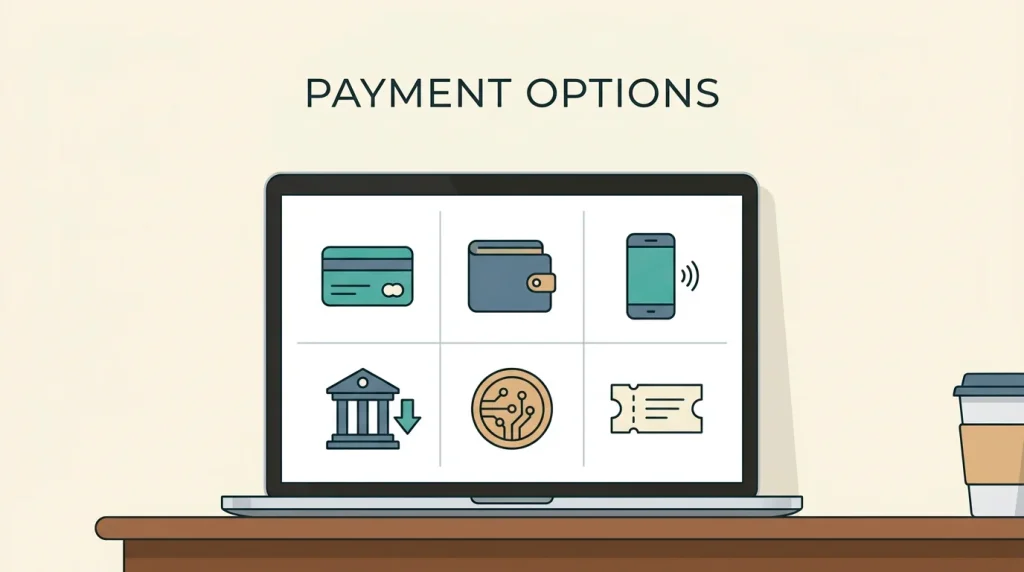
Non-GamStop casinos offer a wider cashier than UK Gambling Commission sites, but that range is not pure convenience. Each method carries its own trade-off between speed, fees, identity-verification behaviour and the ability to reverse a transaction if something goes wrong. This page works through the methods one by one, with the practical points a British reader needs before choosing.
The UK baseline before everything else
Two structural facts about the British market shape how non-GamStop cashiers look. The first is that operators with a UK Gambling Commission remote licence have been prohibited from accepting credit cards for gambling since 14 April 2020, under Licence Condition 6.1.2 of the LCCP. The ban also extends to e-wallet deposits originally funded from a credit card. UK casinos therefore accept debit only.
The second is that British retail banking integrates cleanly with UK-licensed operators through Faster Payments and direct debit-card processing. Balances are quoted in pounds, settlement is predictable, and the merchant category code identifying gambling transactions is consistently applied.
Non-GamStop operators sit outside both norms. Their cashiers may accept credit cards, hold balances in euros or dollars, route through processors other than Faster Payments, and present cashier behaviour that differs noticeably from a UK Gambling Commission site. The supporting context on payment-protection alignment is on the paying and staying safe off GamStop hub.
Debit cards
Visa and Mastercard debit cards remain the most widely accepted deposit method at any casino, GamStop or otherwise. At a non-GamStop site they typically credit instantly, with no fee charged by the operator on deposit and limits set in the cashier rather than by the card scheme.
The relevant protection is chargeback. Card scheme rules give the cardholder a route to dispute a transaction within a defined window if the goods or services were not provided, were misrepresented or were the result of unauthorised use. The window for gambling disputes is narrower than for general retail and the threshold of evidence is higher, but the route exists.
Two practical points: a deposit billed in euros or dollars from a GBP debit card may carry a foreign-currency fee from the issuing bank, separate from any conversion fee at the operator’s end; and a UK bank’s optional gambling block, where the customer has switched it on, may decline some – but not always all – offshore deposit attempts depending on how the merchant is categorised.
Credit cards
Credit cards are unusable for gambling at UK Gambling Commission sites since 14 April 2020. At non-GamStop operators they often remain available, and the appearance of a credit-card logo on the cashier is one of the clearer signals that the operator is offshore.
For a player, using a credit card to gamble carries the well-documented risk that the UK regulator’s ban was designed to mitigate: gambling with money the player does not currently have. The Gambling Commission cited research showing that 22 per cent of online gamblers using credit cards were classed as problem gamblers when the ban was introduced. The same risk has not changed because the operator now sits offshore.
The chargeback position differs by issuer. Some UK credit-card issuers decline gambling transactions on credit accounts outright, regardless of the operator’s location. Where the transaction goes through, Section 75 of the Consumer Credit Act 1974 can apply to disputes above 100 pounds at UK-regulated card issuers, but its application to gambling and to offshore merchants is more limited than to mainstream retail purchases. Treat credit-card chargeback in this space as a partial fallback rather than a reliable one.
PayPal and other e-wallets
PayPal is the leading e-wallet in the UK retail payments market. At UK Gambling Commission operators it is a common deposit and withdrawal route, with PayPal’s own rules requiring that any transaction routed to a gambling merchant comes from sources that comply with the credit-card ban.
At non-GamStop operators the picture is mixed. PayPal’s terms restrict gambling transactions to merchants with the relevant local licence in the customer’s jurisdiction. In practice, this means PayPal is less commonly available at non-GamStop sites than at UK Gambling Commission ones; where it does appear, it may be tied to a specific country selection or a limited subset of operators.
The wider e-wallet family – Skrill, Neteller and Paysafecard among the most common – is more frequently offered. These wallets generally credit deposits instantly, support withdrawals within hours, and add a layer of separation between the player’s main bank account and the operator. Skrill and Neteller in particular are widely supported across the offshore space, though both have their own gambling-merchant rules and fees that apply on top of the operator’s.
For protection purposes the relevant point is whether the wallet supports a dispute route. Regulated e-wallets do, with terms that vary by provider. Less well-known wallets that appear primarily on offshore cashiers may not, and a wallet without a clear dispute mechanism offers little more than the underlying transfer itself.
Apple Pay and Google Pay
Apple Pay and Google Pay are not payment methods in themselves; they are tokenised wrappers around an underlying card. The protection a transaction carries is the protection of the underlying card, not of the wallet. A debit-card transaction routed through Apple Pay carries debit-card chargeback rights; a credit-card transaction routed through Google Pay carries credit-card rights and the same offshore-merchant caveats above.
At non-GamStop operators that accept Apple Pay or Google Pay, the practical attractions are speed and the absence of card-number entry. Neither changes the underlying risk profile of the funding source.
Open Banking and Pay by Bank
Open Banking is the umbrella term for direct account-to-account payments authorised through the customer’s bank app, regulated in the UK under the Payment Services Regulations 2017 and the Financial Conduct Authority’s supervision. At UK Gambling Commission operators the providers most commonly seen are Trustly, TrueLayer and Token.io, branded variously as Pay by Bank.
At non-GamStop operators Open Banking providers do appear, though less consistently than at UK-licensed sites. A Pay by Bank deposit settles within minutes through Faster Payments, where supported, and avoids card-network fees entirely. The trade-off is that account-to-account transfers have a much narrower dispute window than card payments. Faster Payments is essentially irrevocable once authorised, except in cases of unauthorised payment or proven fraud, where the bank’s own complaints process and the Financial Ombudsman Service may apply.
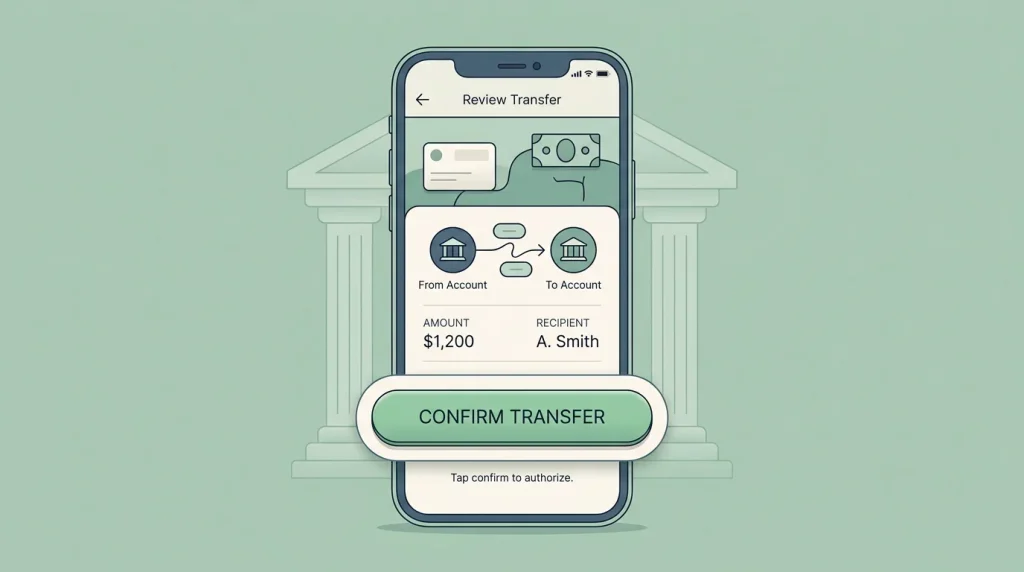
For a non-GamStop deposit, Open Banking can be the simplest and fastest method, but it sacrifices reversibility. It is best paired with operators that pass the wider safe-play checks on the player risks and safe-play checks page.
Cryptocurrency
Cryptocurrency is the most distinctive feature of the non-GamStop cashier compared with the UK Gambling Commission side. Bitcoin, Ethereum and a handful of stablecoins are widely supported at offshore operators, with deposits credited after a small number of network confirmations and withdrawals settled in a similar timeframe.
The dispute position is where crypto departs most sharply from cards and bank transfers. On-chain transactions are not reversible: once a deposit is confirmed, no party can recall it. There is no chargeback equivalent and no card-scheme dispute window. If the operator behaves badly afterwards, the player’s recovery options narrow to the operator’s own complaints process and the licensing jurisdiction’s regulator.
Stablecoins reduce the price-volatility exposure of holding a balance in a crypto asset, but they do not change the reversibility position. Privacy-focused tokens have additional regulatory friction at the UK retail level – several UK-based exchanges restrict or do not list them at all – and using such tokens to fund a gambling deposit creates an audit trail that may complicate later tax or banking conversations.
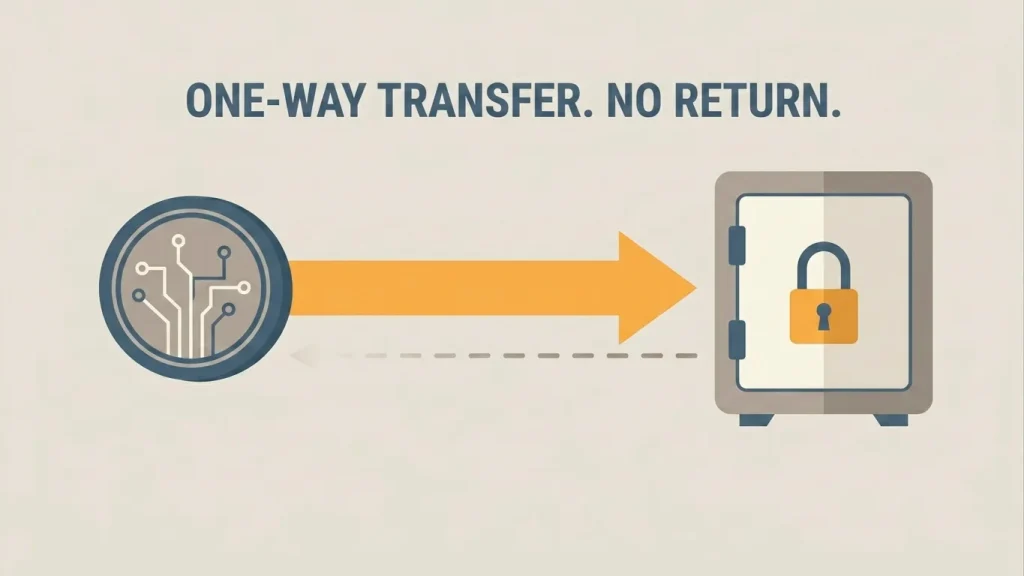
For a UK reader, the working assumption with crypto deposits is that the transaction is final. That assumption is correct for the deposit; whether it is also correct for any later withdrawal depends entirely on the operator.
Bank wires and prepaid cards
International wire transfers and SEPA payments appear in non-GamStop cashiers when other rails are not available. Settlement is measured in business days rather than minutes, fees are higher, and dispute windows are narrow. A wire transfer is the slowest and least reversible of the mainstream options, and is best treated as a last resort rather than a default choice.
Prepaid cards, including Paysafecard, fund deposits from a pre-loaded balance with no link to the player’s main banking. They are convenient and they cap exposure to the amount on the card, but they generally cannot be used for withdrawals, which means the player must nominate a different method for cashing out. That asymmetry needs to be planned for before any deposit is made.
Methods at a glance
The summary below is editorial shorthand only. The dispute position especially can vary by issuer, wallet provider and operator, and should be checked before any single transaction.
| Method | Typical deposit speed | Typical withdrawal speed | Currency on offshore sites | Chargeback or dispute route |
|---|---|---|---|---|
| Debit card | Instant | 1-3 business days | Usually GBP, sometimes EUR/USD | Card-scheme chargeback (narrow gambling window) |
| Credit card | Instant where accepted | Not typically used for payouts | Usually EUR/USD on offshore sites | Partial; Section 75 limited for offshore gambling |
| PayPal | Instant | Hours to one day | GBP where supported | PayPal dispute resolution; restricted on gambling |
| Skrill / Neteller | Instant | Hours | EUR/USD frequently | Wallet dispute terms (variable) |
| Open Banking | Minutes | Same day to next day | GBP usual | Narrow; bank fraud channels only |
| Apple/Google Pay | Instant | 1-3 business days | Underlying card currency | Inherits underlying card rights |
| Cryptocurrency | Network confirmations | Network confirmations | Crypto, fiat-converted at site | None on-chain |
| Bank wire / SEPA | 1-3 business days | 2-5 business days | GBP or EUR | Very narrow; case-by-case |
| Prepaid (e.g. Paysafecard) | Instant | Not for withdrawals | GBP where supported | Voucher-issuer policies |
Identity verification at cashout
Most non-GamStop operators advertise low-friction deposits and apply more rigorous identity checks at the first withdrawal. This is industry-standard anti-money-laundering behaviour at any operator, but the threshold and the depth of the check vary widely off GamStop. Typical requests include a photo identity document, a proof of address dated within the last three months, a selfie holding the identity document, and source-of-funds documentation for larger withdrawals.
The verification step is not in itself a warning sign. A verification that is delayed indefinitely, that returns repeatedly with new requests after each item is supplied, or that escalates only when a particular sum is requested – those are the patterns to flag, and they are covered alongside the wider operator warning signs on the player risks and safe-play checks page.
Choosing a method without overthinking it
Three rules of thumb cover most practical cases for a reader who has already decided to deposit at a non-GamStop operator and now needs to choose how.
Prefer reversible rails by default. A debit-card deposit and a regulated e-wallet preserve the most options if something goes wrong. They are not the fastest or the cheapest, but they leave a path.
Match the method to the amount. Small, recreational amounts on a card or e-wallet do not need the complexity of crypto or wire. Large amounts on irreversible rails concentrate risk in exactly the wrong direction.
Plan the withdrawal before the deposit. Confirm in the live channel which method is used for payouts, how identity verification works, and how long it typically takes. The answer is more informative than any marketing claim, and it gives the reader something to point to later if the actual experience diverges. The main casinos not on GamStop guide ties these mechanics back to the broader picture.
The full picture is in our guide to casinos not on GamStop.
Where the chargeback rights matter: the player risks.
Paying and Staying Safe Off GamStop
Prepared by the Casino Not on Gamstop editorial staff.